
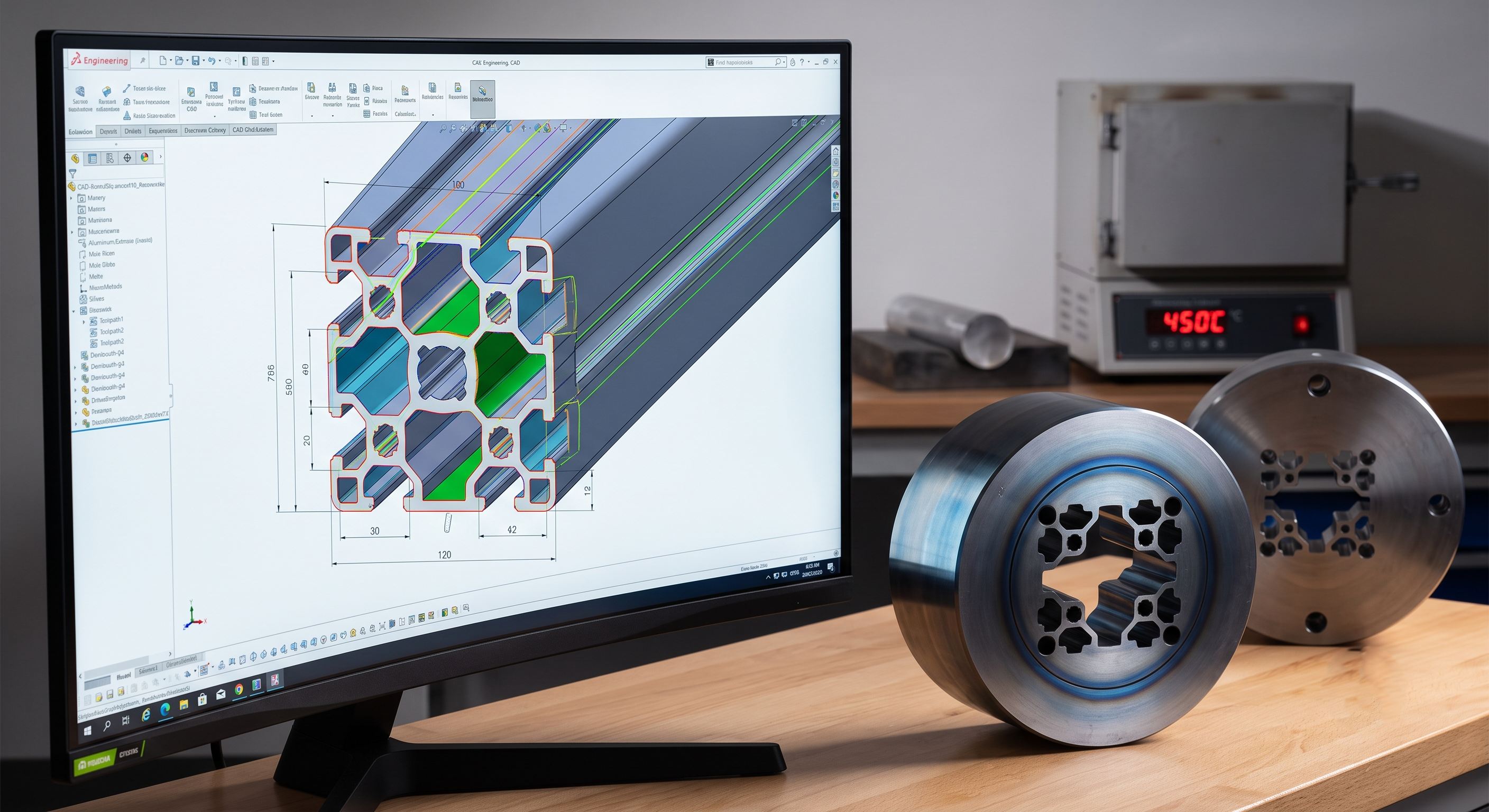
Aluminum extrusion is one of the most efficient ways to shape metal. A round billet of aluminum alloy is forced through a shaped steel die, producing a continuous profile with a precise cross-section — from simple rectangular bars to complex hollow architectural members. Here is how the process works at an integrated plant such as Salco Extrusions Pvt. Ltd. in Tarapur MIDC, Maharashtra.
Step 1: Billet selection and preheating
The process begins with solid cast billets in alloys such as 6061, 6063, 6082 or 6060. Billets are preheated to roughly 450–500°C before being placed in the press, so that the alloy is soft enough to flow but still retains its metallurgical properties.
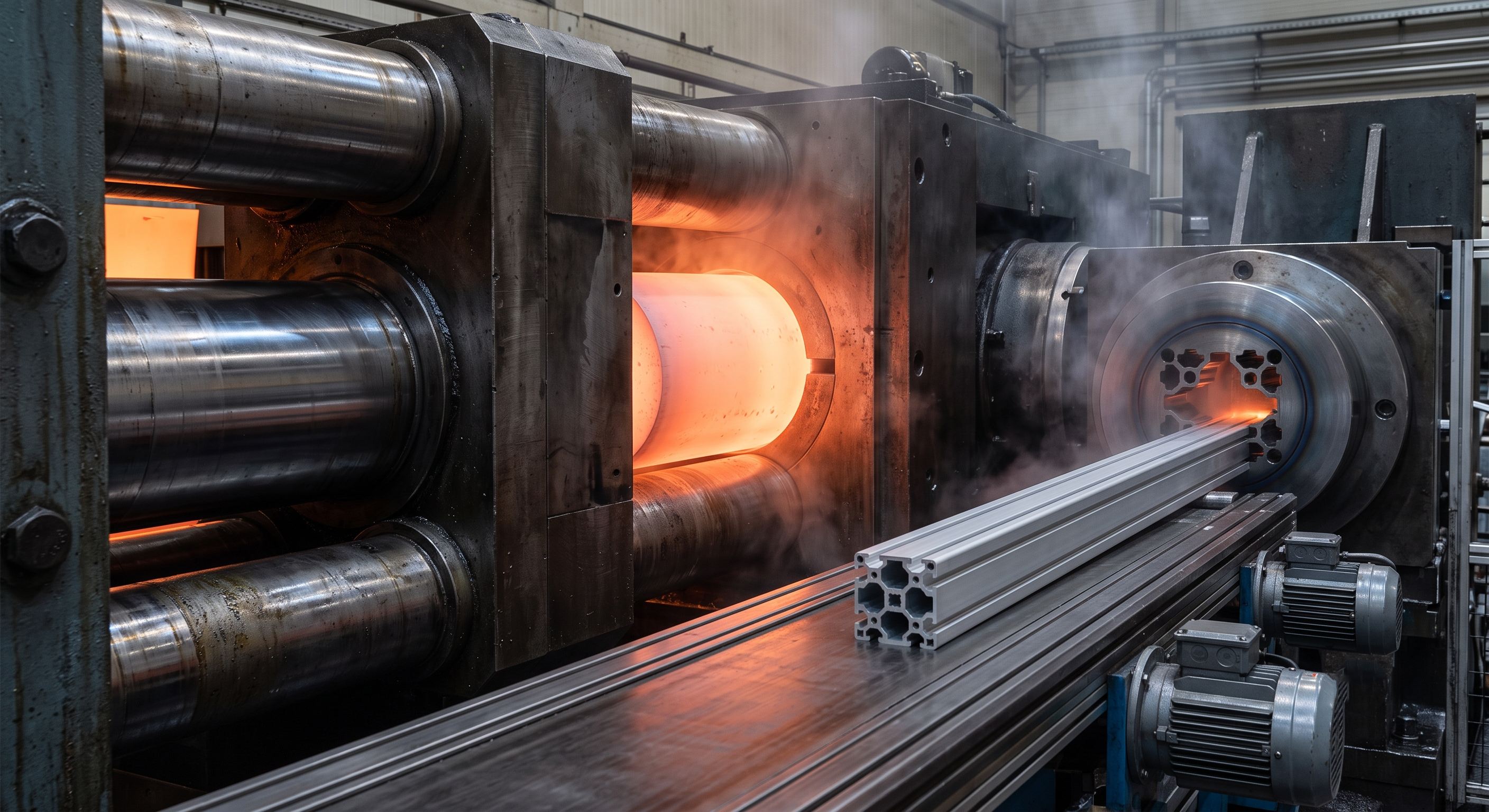
Step 2: Forcing through the die
The hot billet is pushed by a hydraulic ram against a steel die — the hardest-worked component in the process. The metal flows through the die opening, emerging at the shape defined on the print. Because the force is applied in a single direction, extrusion can create long lengths with consistent dimensions across the entire run. Modern presses (from 700T to 1250T and beyond) balance speed against precise control of the profile.
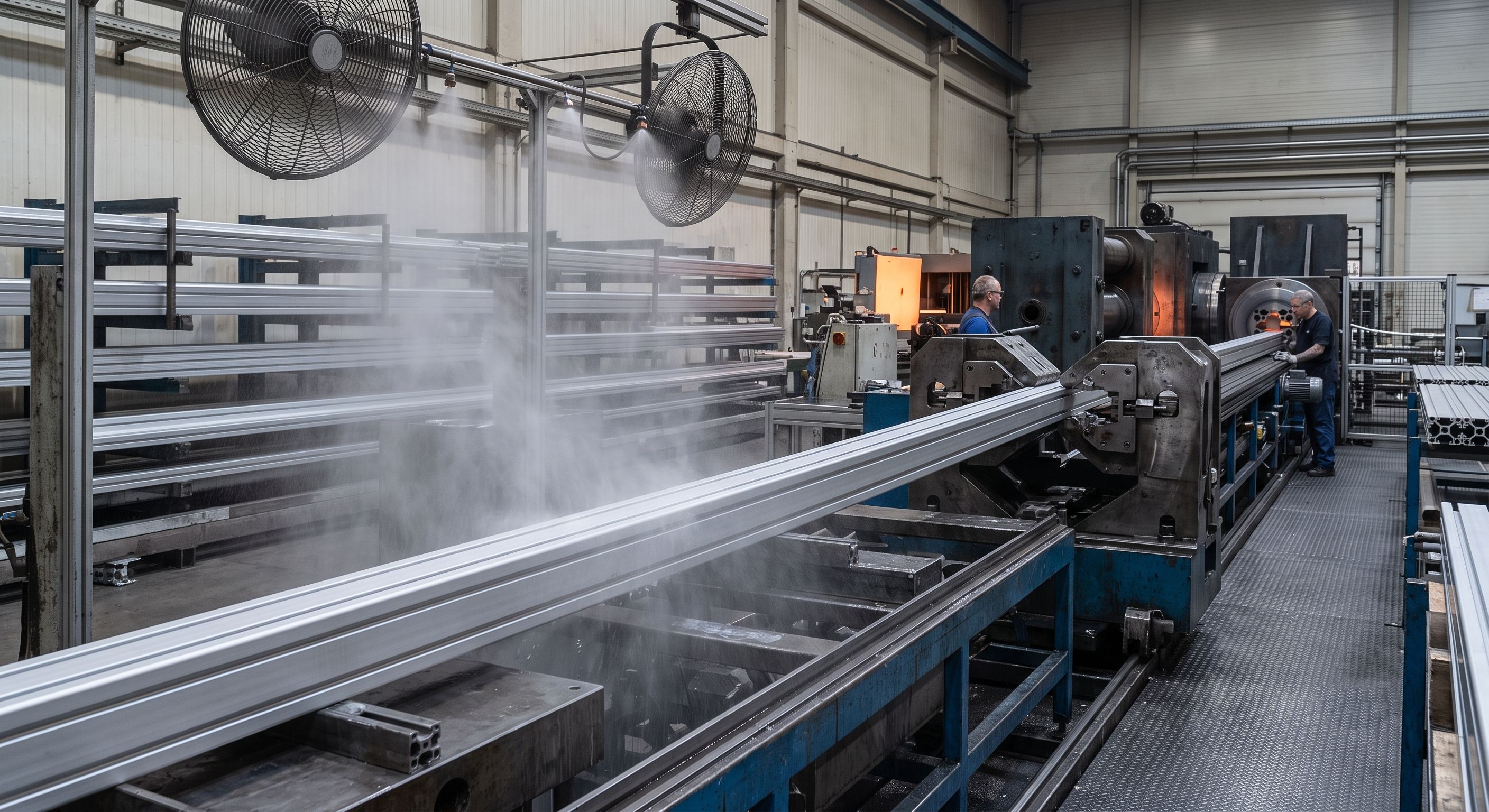
Step 3: Rapid quenching
The freshly extruded profile is immediately quenched — usually with forced air or a water quench — to permanently "freeze" the alloy's structure at high temperature. This step is critical because it determines the final strength of the profile after aging.
Step 4: Stretching and cutting
Profiles are then mechanically stretched to remove residual stress, straightening any twist or bend. Finally, the long run is cut to ordered lengths (typically 6 m), and samples are taken for dimensional and metallurgical inspection.
Step 5: Aging to final temper
Profiles are age-hardened in ovens, either naturally or artificially, to reach the desired temper — commonly T5, T6 or T66. The aging cycle locks in the mechanical properties such as yield strength and hardness that engineers specify.
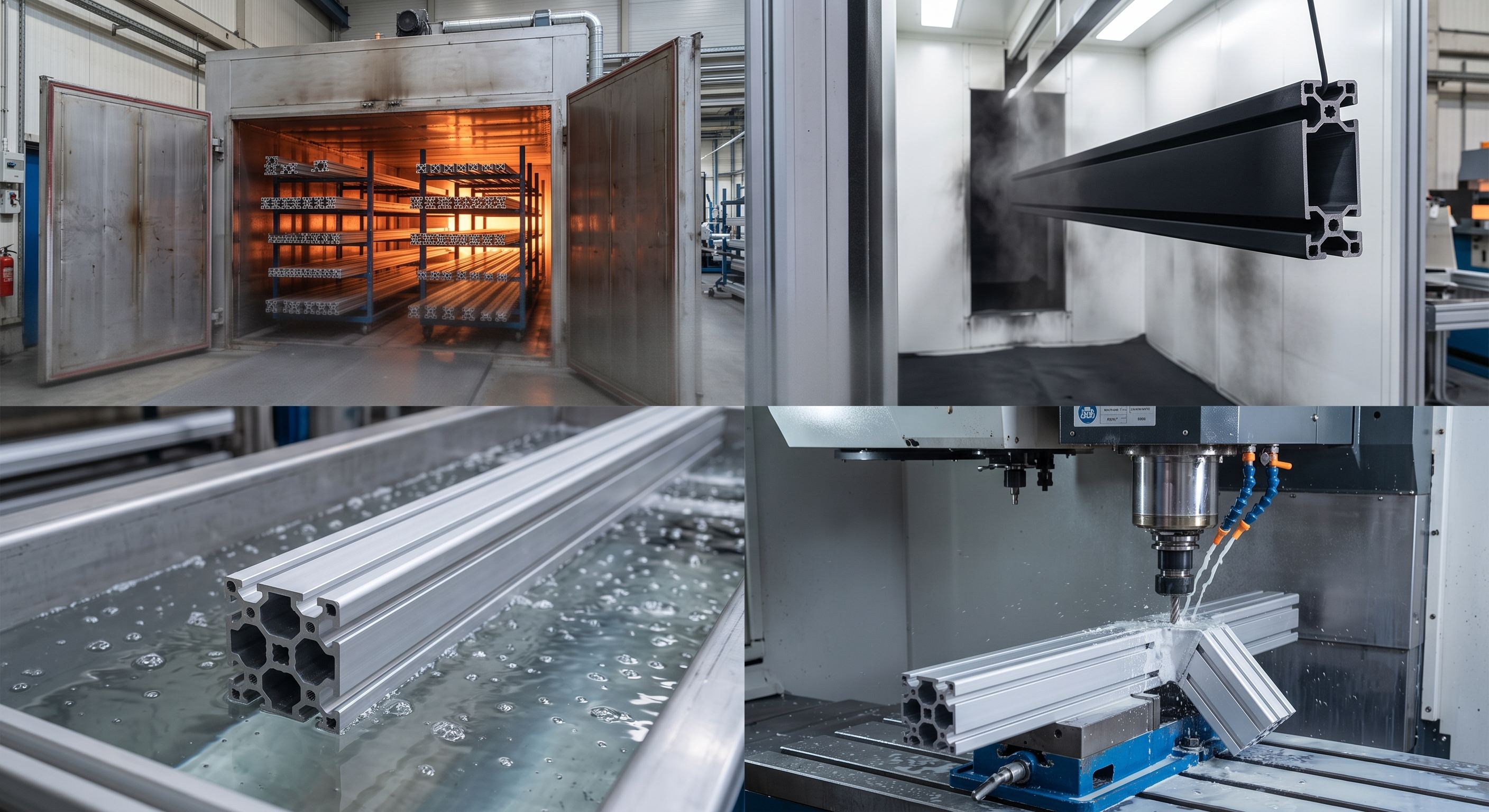
Step 6: Surface finishing
For architectural and consumer products, the profile may go through additional finishing — polishing or machining — plus anodizing or powder coating executed by qualified third-party finishing vendors, which improves appearance, corrosion resistance and wear life. At Salco, mechanical buffing and polishing are performed in-house; anodizing and powder coating are routed through our approved coating partners.
Why manufacturers choose extrusion
- Design freedom — almost any cross-section can be produced, including hollows and thin webs.
- Strength with light weight — a 60–80% weight saving versus steel for equivalent stiffness.
- Consistent accuracy — repeatable dimensions across production runs.
- Scalable — the same die produces millions of meters of identical profile.
If you are evaluating a profile design, the fastest way to validate a shape and cost is to talk to an experienced manufacturer early. Indian engineers and procurement teams find the custom die development and in-house tooling we offer at Salco minimises both lead time and per-part cost.
Choosing the right partner
An aluminum extrusion manufacturer in India should offer not just the press but the full value chain: in-house die design, foundry casting, heat treatment and metallurgical testing. Salco Extrusions combines all of these under one roof, with an ISO 9001:2015-certified quality system and a 6,000 MT annual capacity, supporting industries from defense to automotive.